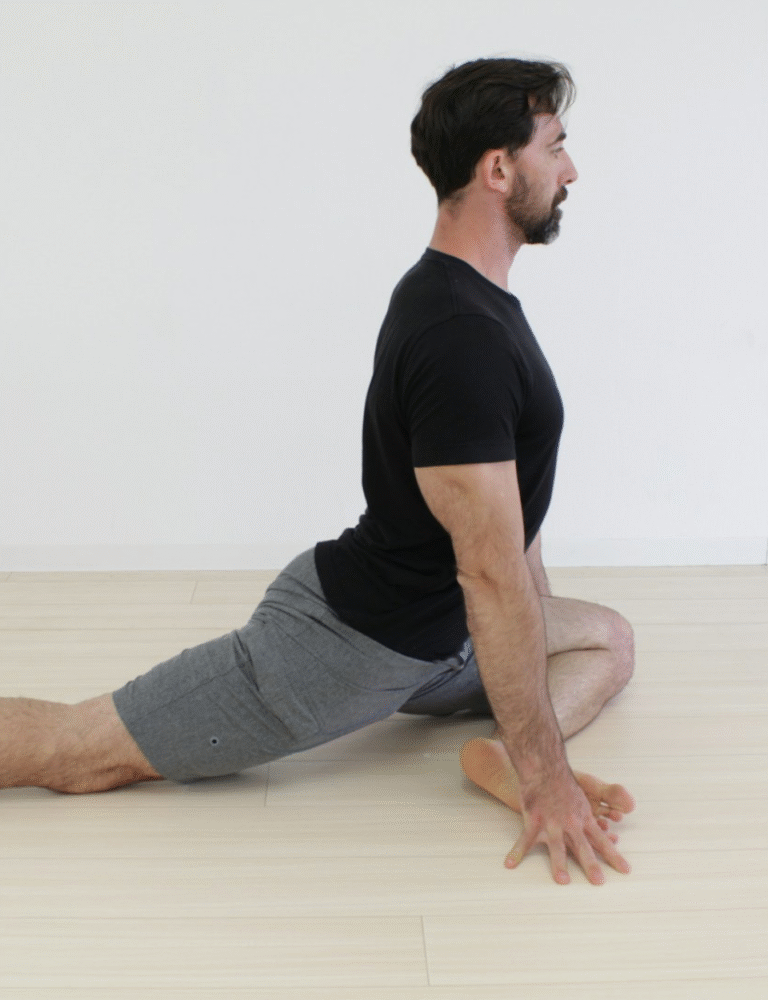
Am I Supposed to Relax My Muscles in Yin Yoga?
If you’ve ever held a yin yoga pose and wondered, “Wait…am I supposed to be relaxing my muscles right now?” you’re not alone. It’s one of the most common questions students bring to class.
Unlike active yoga styles where muscle engagement is essential, yin yoga works differently. Its purpose is to target fascia and connective tissue through long, still holds. And that means the role of your muscles is unique in this practice.
Let’s take a look at how yin yoga compares to other styles, and why its approach to muscles is so different.
Yin Yoga vs Yang Yoga — Different Approaches to Muscles
In most yoga styles like vinyasa, ashtanga, or power yoga, muscle engagement is the main event. These “yang” practices rely on strength, heat, and movement. You’re actively contracting muscles to build stability, increase circulation, and generate energy.
Yin yoga takes the opposite approach. Instead of asking your muscles to work harder, yin asks them to soften. By releasing muscle tension, the stress of the pose shifts into fascia and connective tissues, the web that supports and links your entire body. This is why yin poses are held for several minutes. Fascia responds best to slow, steady pressure, not quick contractions.
So while yang yoga builds strength and stamina through active muscle engagement, yin yoga cultivates release and resilience by inviting muscles to relax. This difference is what makes yin feel so deeply restorative, even though you’re still stretching.
What Happens When You Relax Muscles in Yin
When you consciously let your muscles relax in a yin pose, you shift the workload from active muscle fibers to the deeper connective tissue. This is where the magic of yin happens.
Fascia takes the load
Relaxed muscles allow gentle, sustained stress to reach fascia. Over time, this encourages the tissue to rehydrate, release adhesions, and become more pliable—something short, active stretches can’t achieve.
The nervous system softens
Muscle tension often signals the body to stay alert. By relaxing, you reassure your nervous system that it’s safe to let go. This activates the parasympathetic “rest-and-digest” state, making yin yoga as calming for the mind as it is for the body.
There’s a deeper sense of release
Relaxation allows gravity and time to do the work. Instead of forcing a stretch, you experience a slow unfolding, or “opening up“, a feeling many practitioners describe as both physical spaciousness and emotional relief.
When a Little Engagement Helps
While yin yoga emphasizes relaxation, there are moments when a touch of muscle engagement can actually support your practice. Think of it as creating just enough stability so your body feels safe to soften.
Protecting vulnerable joints
In some poses, a little activation helps prevent strain. For example, in Caterpillar (a seated forward fold), lightly engaging your quadriceps can protect the knees and hamstrings.
Supporting healthy alignment
Engagement can also help you avoid collapsing into your joints. In Sphinx pose, gently pressing your forearms into the mat engages the shoulders just enough to prevent sagging in the lower back.
Finding balance
The key isn’t to hold the pose with muscle effort, but to use minimal activation where necessary while letting the rest of the body relax. Think of it like scaffolding, giving just enough support to let the deeper tissues release safely.
How to Practice Muscle Relaxation in Yin Yoga
Relaxing your muscles sounds simple, but if you’re used to more active styles of yoga, or if you carry a lot of tension, it can feel surprisingly tricky. Here are some ways to practice muscle release in yin:
1. Find your “edge”
Instead of pushing to your maximum stretch, ease into the pose until you feel gentle sensation. Go to about 60–70% of your limit in a pose. This gives your muscles permission to soften so you can gently go deeper during the hold.
2. Use props generously
Bolsters, blankets, or pillows aren’t signs of weakness, they’re tools that allow your body to truly let go. When you feel supported, your muscles don’t need to hold on.
3. Let your breath guide you
Notice your breathing. If it’s shallow or choppy, you may still be gripping. Slow, steady breaths are a sign that your muscles are relaxing safely.
4. Scan and release
Bring awareness to common tension spots such as jaw, shoulders, belly, and consciously soften them during each pose.
Over time, relaxing becomes a skill. The more you practice it in yin, the easier it becomes to carry that ease into daily life.
YIN SUMMARY
By learning when to let go and when to lightly engage the muscles, you’ll discover the sweet spot where yin yoga becomes both safe and deeply restorative.
If you’d like to explore this more, the natural next step is to try a beginner-friendly yin sequence designed specifically for relaxation. With time and practice, releasing effort on the mat will help you release effort off the mat too.