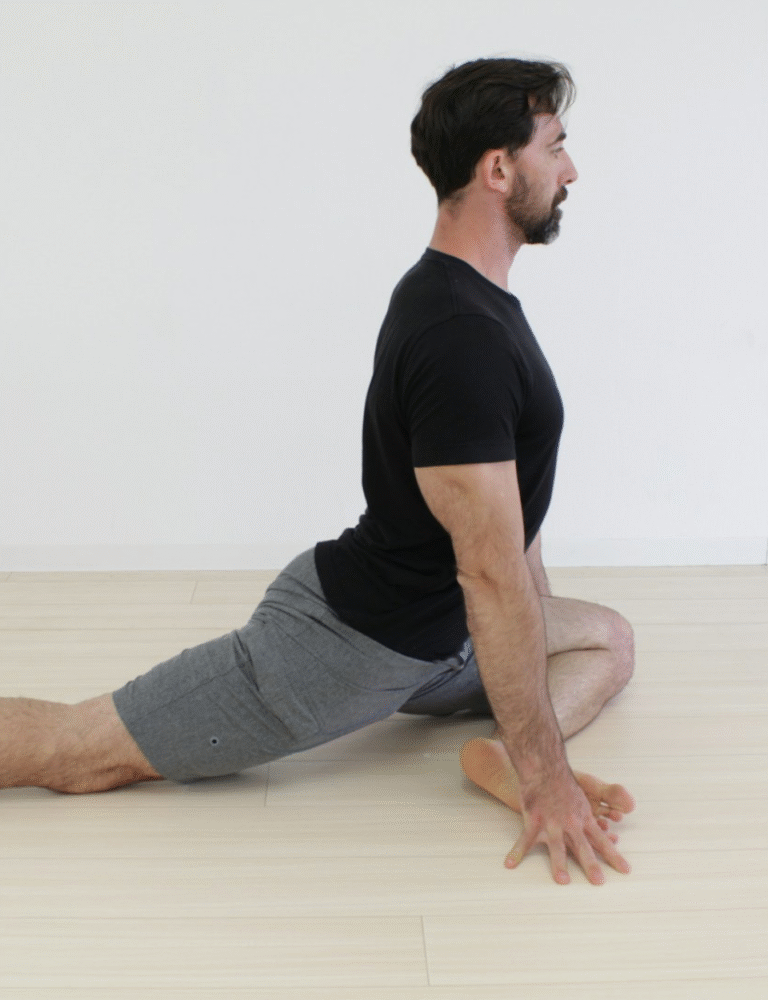
BEGINNERS GUIDE: Introduction to Yin Yoga
Yin yoga is not about rushing, sweating, or pushing yourself to the limit. Instead, it invites you to slow down, settle in, and explore what happens when you give your body and mind the gift of stillness.
Over the past few decades, yin yoga has quietly grown from a niche style into a practice embraced by yogis, athletes, and beginners of all ages, sizes, and backgrounds. Its appeal lies in its simplicity: a handful of floor-based poses held for several minutes at a time, supported by the breath and, often, props. But beneath this simplicity is a surprisingly profound practice that touches the body, mind, and even the energetic layers of our being.
As Paul Grilley, one of the leading teachers of yin yoga in the West, explains, “Yin is not about working the muscles, it is about safely stressing the connective tissue.” This distinction is at the heart of what makes yin yoga so unique, and why so many people discover unexpected benefits from it.
In this guide, we’ll explore what yin yoga is, where it comes from, its guiding principles, the benefits it offers, and how you can begin your own practice. Whether you are completely new to yoga or a seasoned student looking for balance, yin yoga has something to offer.
What Is Yin Yoga?
At its core, yin yoga is a slow, floor-based style of yoga where postures are held for extended periods of time, usually between three and five minutes, sometimes longer. Unlike more active or “yang” practices such as vinyasa or hatha, which strengthen and energize the muscles, yin yoga focuses on what lies deeper: the body’s connective tissues.
Connective tissue includes fascia, ligaments, and the capsules around your joints. These structures don’t respond to quick movement or repetition in the same way muscles do. Instead, they require gentle, sustained stress in order to stay healthy and mobile. By holding postures in stillness, yin yoga applies precisely this kind of stress, encouraging fascia to rehydrate, joints to maintain their range of motion, and the body to release patterns of tension that build up over time.
But yin yoga is not only physical. The stillness of the practice also creates space for the mind to slow down. Without the distraction of constant movement, you begin to notice thoughts, sensations, and emotions that might otherwise be overlooked. This makes yin not just a physical discipline, but a meditative one, an invitation to cultivate awareness and presence while supporting long-term mobility and balance.
A Brief History of Yin Yoga
Although yin yoga feels modern in its presentation, its roots reach back to much older traditions. The practice is shaped by elements of Taoist philosophy, Chinese medicine, and classical yoga, woven together into a style that speaks to today’s need for slowing down.
The earliest seeds of yin yoga in the West were planted in the 1970s and 1980s. Martial artist and Taoist yoga teacher Paulie Zink developed a unique system of long-held postures inspired by Chinese energy practices and animal movements.
One of his students, Paul Grilley, recognized the potential of these methods and began to refine them through the lens of anatomy and physiology. Grilley emphasized that yin yoga was not about stretching muscles but about safely stressing connective tissue, fascia, ligaments, and joints, so that they remain supple and resilient.
As interest in yoga grew in the West, so did the popularity of yin. Grilley and his student Sarah Powers helped spread the practice worldwide, adapting it into a form that could complement both active yoga styles and modern lifestyles. Today, yin yoga is practiced everywhere from small community studios to online platforms, appreciated for its balance of accessibility and depth.
In short, yin yoga is both ancient and contemporary. It draws on Taoist ideas of balance, integrates Chinese meridian theory, and rests firmly within the broader yoga tradition, while also responding to the modern need for stillness in a fast-paced world.
The Principles of Yin Yoga
Yin yoga may look simple from the outside, but it is guided by a few key principles that make the practice safe, effective, and transformative. These principles are what set yin apart from other yoga styles and give it its distinctive character.
1. Find your edge
In yin, you gently place your body into a posture until you feel sensation—not pain, but a mild stretch or compression. This edge is where the tissues are being safely stressed. There is no pushing or forcing; yin is about patience rather than intensity.
2. Hold the pose
Instead of flowing quickly from one shape to another, yin asks you to stay. Poses are held for three to five minutes, sometimes longer, because connective tissue responds best to slow, sustained stress. Time is the magic ingredient in yin.
3. Be still
Once you’re in the pose, the practice is to soften. You release unnecessary muscular effort, quiet the body, and settle into stillness. This stillness creates the conditions for fascia to release, joints to open, and the mind to rest.
4. Every body is different
No two skeletons are the same. A posture that looks effortless for one person might be uncomfortable for another. The principle of individuality is central in yin yoga: poses are adapted with props, variations, and personal exploration to fit the body you have, not the one you wish you had.
Together, these principles make yin yoga less about achieving a picture-perfect pose and more about exploring your own edges with curiosity, compassion, and patience.
The Benefits of Yin Yoga
The beauty of yin yoga is that its benefits ripple through every layer of our being. What begins as a quiet, floor-based practice often leads to changes that are felt not only in the body but also in the mind and nervous system.
Physical benefits
Yin yoga targets connective tissues that are often overlooked in more active practices. Long-held poses help fascia rehydrate and release tension, which supports mobility and flexibility. Over time, this improves joint health, reduces stiffness, and helps the body move with greater ease. Many practitioners also notice improved posture and relief from the kind of deep-seated tightness that builds from sitting or repetitive movements.
Mental benefits
Because yin is slow and still, it naturally cultivates mindfulness. Staying in a pose for several minutes teaches patience and builds resilience, as the mind learns to sit with sensations rather than constantly chasing distraction. The practice also encourages emotional release: moments of stillness often allow buried feelings to surface and dissolve, leaving you lighter and more at ease.
Nervous system benefits
The quiet atmosphere of yin helps regulate the nervous system. Instead of stimulating fight-or-flight responses, yin invites the body into rest-and-digest mode. Many practitioners report better sleep, reduced anxiety, and an overall sense of calm after practice.
Energetic benefits
From a traditional perspective, yin yoga also supports the flow of energy, or chi, through the meridians described in Chinese medicine. Some people experience this as a “rebound effect” when they come out of a pose, a subtle rush of sensation or warmth followed by deep relaxation. Whether you interpret this through the lens of energy or simply as the nervous system recalibrating, the effect is undeniably grounding.
Taken together, these benefits make yin yoga more than just a stretch. It is a practice of balance—one that nourishes both body and mind while offering a quiet counterpoint to the pace of modern life.
Common Misconceptions About Yin Yoga
Because yin yoga looks so different from more familiar yoga styles, it often gets misunderstood. Clearing up these misconceptions helps new students approach the practice with an open mind.
“Yin yoga is too easy.”
On the surface, yin looks effortless, there’s no sweating, no fast transitions, and poses are supported by props. But holding a posture for five minutes requires patience, focus, and a willingness to be with discomfort. Yin is simple, not easy.
“Yin yoga is boring.”
For beginners, the stillness can feel uncomfortable or even dull. In reality, this stillness is the practice. It’s an opportunity to notice sensations, thoughts, and emotions with more clarity. Over time, what once felt boring becomes deeply nourishing.
“Yin and restorative yoga are the same.”
Though both are quiet practices, they have different goals. Restorative yoga is about rest and recovery, with poses fully supported so there is no effort at all. Yin, by contrast, applies gentle stress to connective tissues, creating subtle but important adaptations in the body.
“Yin yoga isn’t real exercise.”
It’s true that yin won’t raise your heart rate or build muscle. But it provides something equally essential: mobility, fascial health, and nervous system balance. When paired with yang practices like vinyasa, strength training, or running, yin completes the picture of a well-rounded, sustainable routine.
By reframing these misconceptions, yin yoga emerges not as a lesser practice, but as a complement to the more familiar forms of movement and fitness.
How to Practice Yin Yoga Safely
Although yin yoga is gentle, it still requires mindful attention. The goal is to nurture your body, not to force it into positions it isn’t ready for. With the right approach, yin can be safe and deeply restorative for practitioners of all ages and body types.
Use props generously
Bolsters, blankets, and yoga blocks can transform your practice. Props help reduce strain on joints, support the body in longer holds, and make poses accessible for every body shape. In yin, props are not a sign of weakness, they are part of the practice.
Listen to your edge
Yin asks you to find the point where you feel sensation, but not pain. If you notice tingling, numbness, or sharp discomfort, that’s your cue to ease out or adjust. Your edge will look different from day to day, and honoring that is a sign of wisdom, not limitation.
Start with shorter holds
If holding a pose for five minutes feels overwhelming, begin with one or two minutes. Over time, your body and mind will adapt, and you can gradually extend the duration. Yin is about consistency, not rushing.
Balance stillness with awareness
Stillness doesn’t mean zoning out. Stay curious about what’s happening in your body. Notice your breath, the subtle shifts in sensation, and how you feel when you come out of the pose. This awareness is where much of yin’s value lies.
Know when to rest
If you feel fatigued or emotionally overwhelmed, pause. Child’s Pose or simply lying on your back is always available. Yin yoga is not about pushing through discomfort, it’s about cultivating kindness toward yourself.
When practiced with care, yin yoga becomes not only safe but also sustainable, offering benefits that build gently over time.
Getting Started With Yin Yoga
Beginning a yin yoga practice doesn’t require fancy equipment, years of experience, or even a studio membership. All you need is a quiet space, a few simple props, and the willingness to slow down.
Set the space
Find a calm environment where you won’t be disturbed. Dim the lights, play soft music if it helps, and make sure you’re warm enough to stay comfortable during long holds. Long pants, slouchy socks, and long sleeves can keep you cozy during your practice.
Use what you have
Yoga props are helpful but not essential. A stack of pillows can replace a bolster, a folded blanket can cushion your knees, and books can serve as blocks. Comfort is the priority.
Start small
Begin with two or three poses for just 10 to 15 minutes. For example, try Butterfly (a seated forward fold with soles of the feet together), Sphinx (a gentle backbend on the belly), and Supported Child’s Pose (kneeling with arms stretched forward). Hold each for one to two minutes and gradually extend the time as you feel ready.
Focus on the after-feeling
Many benefits of yin yoga appear not during the pose, but afterward. When you come out of a posture, pause and notice how your body feels. This “rebound” is a central part of the practice.
Consider guidance
If you’re unsure where to begin, explore online classes, apps, or local studios that offer yin yoga. Look for teachers who emphasize accessibility and remind you to adapt poses to your body.
By starting small and focusing on comfort and awareness, you’ll begin to build a practice that feels supportive rather than overwhelming. Over time, those quiet minutes can become a powerful anchor in your day.
YIN SUMMARY
Yin yoga is a practice of slowing down in a world that rarely pauses. With its long-held postures, emphasis on stillness, and focus on connective tissue, it offers something that many modern movement practices do not: balance. What may look quiet or even uneventful from the outside is, in fact, a deeply transformative process for body, mind, and nervous system.
Whether you come to yin seeking relief from stiffness, a calmer mind, or a way to balance more active exercise, the practice meets you where you are. As Paul Grilley reminds us, yin yoga is not about achieving perfect shapes, but about finding a way into stillness that works for your unique body.
Starting small, perhaps just a few poses in the evening to ready your mind for a peaceful sleep, is enough to begin experiencing its effects. Over time, those minutes of stillness can ripple out into the rest of your life, bringing more patience, resilience, and ease. Far from being a secondary style, yin yoga is a complete practice in its own right, and an invaluable complement to the pace of modern living.